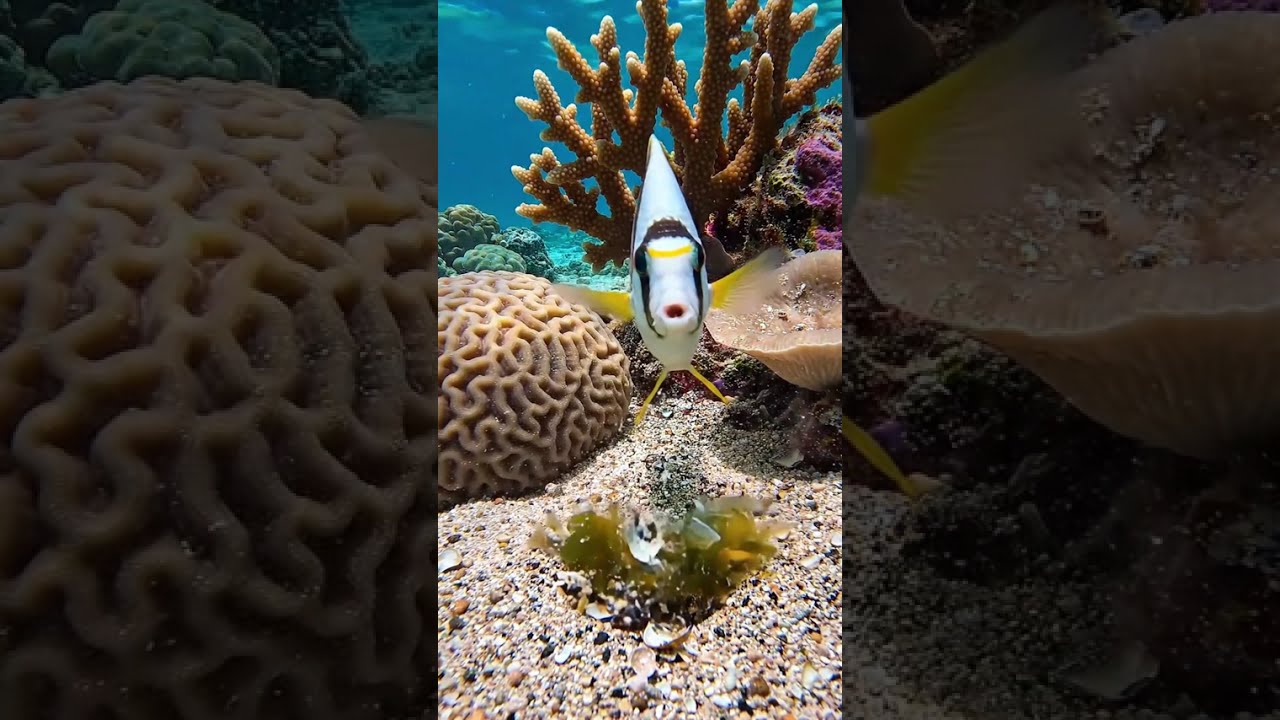
A copperband butterflyfish (Chelmon rostratus) – with its elegant white body, bold black vertical bands, incredibly long tubular snout, and vivid yellow-orange tail – was gliding over the Indo-Pacific reef when it spotted something: a tiny tulip cone snail with a beautiful reticulated patterned shell and dark band.
The snail vanished inside a sand hole. The butterflyfish followed.
When it emerged moments later, the butterflyfish’s mouth was held wide open – revealing multiple big mouthfuls of algae, shell fragments, sand grains, and plant material inside. Then, it ate.
What happened to the snail? Did the butterflyfish find a feast in the hole? Or was the snail part of the meal?
Comments
One response to “Copperband Butterflyfish Found A Tulip Cone Snail In A Hole Then Emerged #shorts”
The Tulip Cone Snail (Conus tulip) might look slow, but it's one of the ocean's most potent venomous predators, using specialized neurotoxins to hunt fish in coral crevices!
(Visual recreation generated with AI to illustrate marine biodiversity and reef interactions.)
What fascinates you most about reef ecosystems?